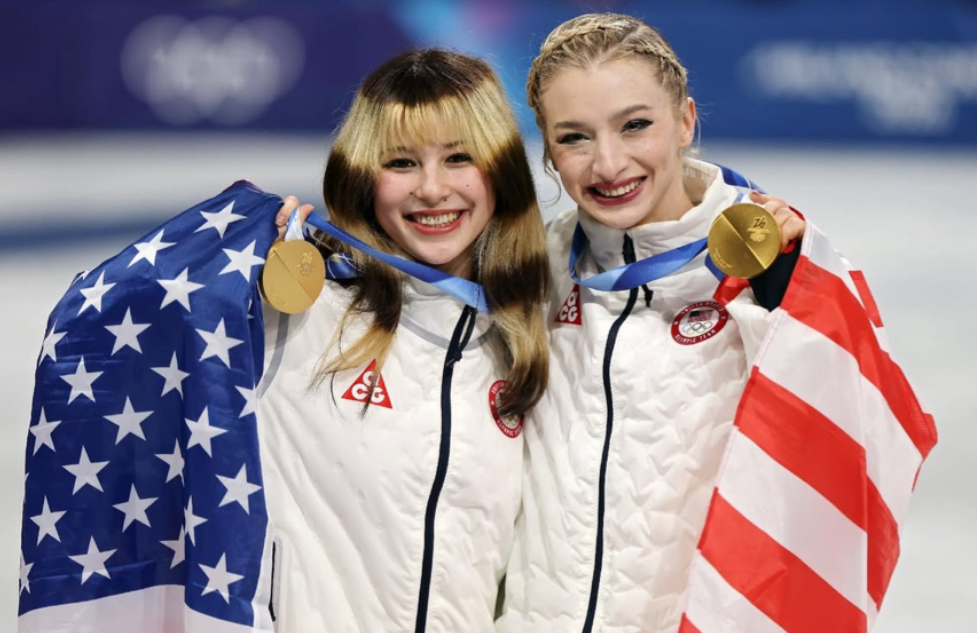
Winter sports have exploded in popularity around the Olympics thanks to social media, and for good reason, though it’s hard to tell whether the credit belongs to HBOs Heated Rivalry or the endless stream of TikTok edits turning skaters into viral icons overnight.
Figure skating has long been one of the most tradition-bound events in the Winter Olympics – a sport defined by classical music, balletic lines, sequined costumes, and unwritten expectations about how champions should look, move, and present themselves. For decades, success in the sport was often associated with a narrow aesthetic: delicate presentation, restrained personality, and conformity to established norms. But today that mold is beginning to change, with Team USA seemingly at the centre of that shift.
For much of its modern history, figure skating rewarded a specific mold. Programs leaned heavily on European classical traditions. Costuming and choreography followed familiar patterns. Even personality was often filtered into a polished, restrained performance style. The sport celebrated excellence, but it also quietly enforced uniformity. Skaters who pushed too far outside the aesthetic norm sometimes found themselves misunderstood by judges or commentators, even when their technical content was strong.
Today’s American team looks and feels different. It reflects a generation more comfortable with individuality, cultural diversity, and openness about identity. That evolution is visible not just in program music and choreography choices, but in the athletes themselves and the stories they bring with them to the rink.
Alysa Liu is a clear example of that shift. A first-generation American and the child of immigrants, Liu rose to prominence as a record-breaking prodigy, landing ultra-difficult jumps at an age when most skaters are still climbing the ranks. But what has kept people talking is not just her technical ability, it’s her refusal to be boxed into figure skating’s traditional persona. Her relaxed demeanor, alternative style choices, and candid attitude toward pressure and expectations have made her stand out in a sport that historically favored carefully managed images. When she stepped away from elite competition at a young age and later returned on her own terms, she challenged another deeply rooted assumption that skaters must follow a rigid, nonstop pipeline from childhood to podium. Her path suggested that longevity and self-definition can matter as much as early dominance.
Amber Glenn represents another important break from convention. As an openly gay national champion competing at the highest levels of the sport, Glenn brings visibility that figure skating has rarely seen among its top singles competitors. The skating world has long included LGBTQ+ contributors behind the scenes, but elite competitive visibility has lagged. Glenn’s openness, combined with her athletic success, signals a cultural shift in what acceptance looks like in judged sports. Social media has seen her pride first hand, she posts alongside Liu ‘They hate to see two woke b*tches winning’, ‘If ‘woke’ means people who use their platforms to advocate for marginalised communities in the country they are actively representing… then yeah sure?’. For younger fans and athletes, especially Gen Z viewers who expect authenticity rather than image management, that visibility is not a side note – it is central to why her presence matters.
This changing roster also lands in a broader national context. In a tense cultural moment where immigration and belonging are frequent topics of debate, a U.S. team featuring multiple children of immigrants competing under the American flag offers a powerful counter-image: excellence powered by diversity. Sport has always told a version of a country’s story to the world. Figure skating, once seen as culturally narrow, is now helping tell a wider one.
Importantly, this evolution does not mean the sport is abandoning its foundations. The technical standards remain high. The training is still grueling. The precision and artistry that define great skating have not disappeared. What is changing is who gets to interpret those standards and how they express them. Programs now pull from broader musical genres. Performance styles are more varied. Personality is less filtered. The definition of “presentation” is expanding from polished uniformity to intentional individuality.
That matters for the future of the sport. Younger audiences are drawn to athletes who feel real, not manufactured, competitors who bring their full identities with them rather than fitting into a preset role. When viewers see skaters who reflect different backgrounds, orientations, and styles, the barrier to entry, as a fan or as a future athlete, gets lower.
A sport built on tradition is not losing its identity; it is updating it. The ice is still a place of discipline and difficulty, but it is increasingly also a place of self-definition. Team USA’s current lineup shows that figure skating’s next era will not be shaped by a single ideal image of a champion, but by many and that shift may be exactly what keeps the sport relevant to the generation now watching.