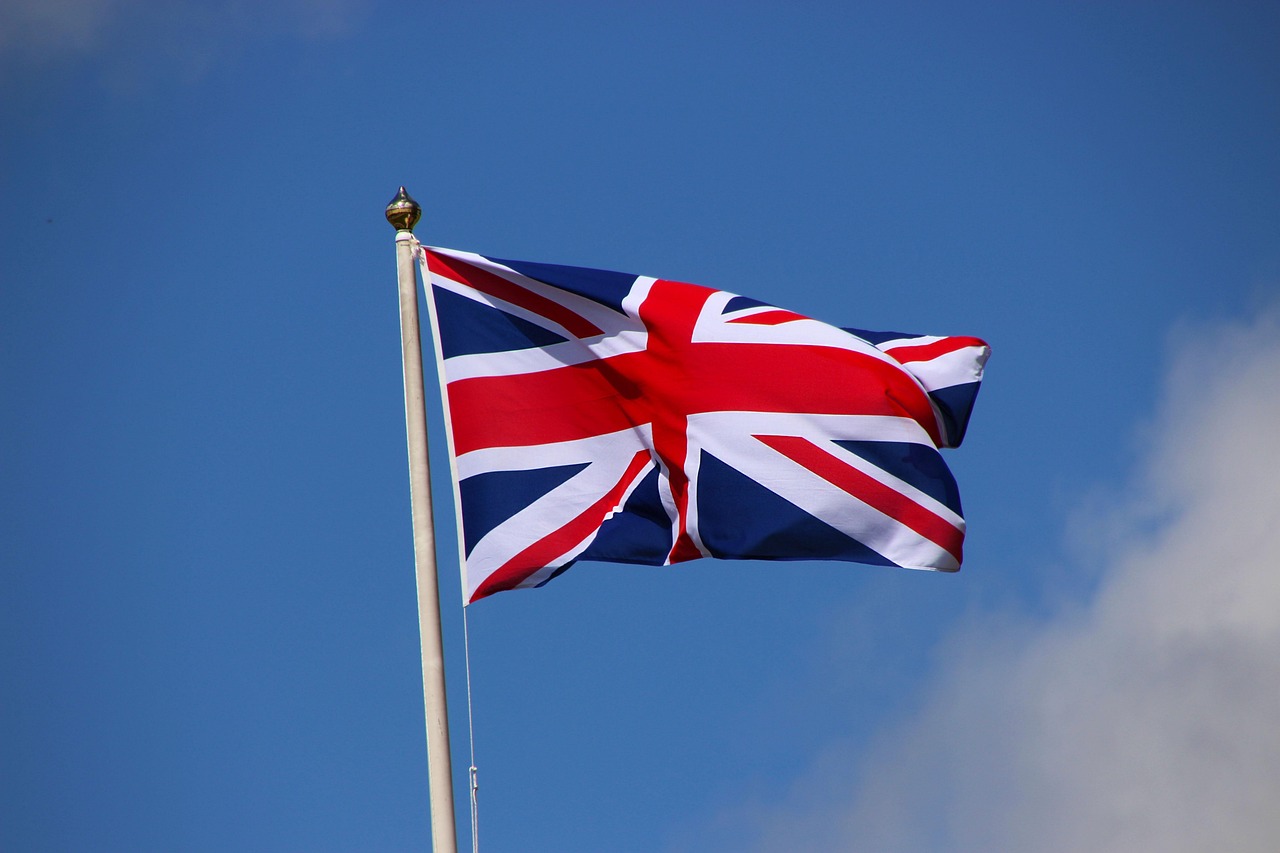
The York Dialectic Union recently hosted a debate on the ‘Raise the Colours’ campaign. The speakers for the proposition were Alec Shelbrooke MP and David Lloyd OBE. Representing the opposition were speakers Frank Adlington-Stringer and Buki Mosaku.
The ‘Raise the Colours’ campaign is a movement born in South Birmingham which seeks to demonstrate and boost patriotism in the UK by covering the country in flags. While the website for this campaign champions unity and community, within the first ten seconds of the promotional video, there is a large Union flag banner with “Stop the boats” across it. Regardless of which end of the political spectrum someone falls on, it can be acknowledged that the campaign appears to adopt right-wing slogans and ideas. With all that in mind, it’s no wonder the University of York had a statement of inclusion read out at the beginning of the debate.
For the Proposition:
Alec Shelbrooke kicked things off. His speech emphasised the necessity of flying national flags with pride and the history of the St George’s flag. He contributed an anecdote from his work as the leader of the UK delegation to the NATO parliamentary assembly, where a Polish delegate found it amusing that putting up flags is a contentious debate in the UK.
“I felt great shame at that.”
Alec Shelbrooke, first proposition speaker
Shelbrooke acknowledged that the flag has been used against marginalised groups to instil feelings of fear and unwelcomeness; but he saw this as the flag being “hijacked” by far-right and far-left groups. He argued that we should not allow these groups’ use of the flag to colour our opinion of all people who raise flags across their community.
Despite all these claims that the flag is for everyone, Shelbrook also argued that Christians are told to be quieter about their religion to not offend other religions and that saying “Happy Holidays” instead of “Merry Christmas” is pushing Christianity aside. These comments directly reject inclusion and the notion that the flag is for everyone, as he associated the people raising these flags with the same group of people who felt like their religious beliefs have been marginalised.
For the opposition:
The order of speaking alternated between the proposition and the opposition, with Frank Adlington-Stringer speaking next. He focused on community and identity and how this is beyond a flag. He highlighted the multicultural character of Britain and criticised groups that wish to boil British identity down to being ethnically white. He brought his own multicultural heritage in as an example, as well as that of Freddie Mercury, whose music is used for far-right protests despite him being the child of Parsi immigrant parents.
His argument was determinedly more targeted at political figures and parties than Shelbrooke’s broad, sweeping statements about generic groups. He criticised Nigel Farage’s rhetoric and how Reform UK’s anti-immigrant policies do not actually solve the core economic issues facing Britain. In addition to this, he also criticised the lack of action by the current Labour government and the previous Conservative governments.
“I would rather see flourishing high streets and affordable living than flags on lampposts.”
Frank Adlington-Stringer, first opposition speaker
For him, flags on lampposts do not solve real, deep-rooted issues.
Instead, they only serve to divide the community. He found this emphasis on flag-raising to be a move toward fascism and believed that flag raising should be a choice – a stark contrast to Shelbrooke’s insistence that they ought to be on every public building.
For the proposition:
The second half of the debate returned to the proposition, with David Lloyd taking the floor. He stressed the importance of symbols, noting it was interesting how not a single audience member was wearing a poppy while he, the speakers, and the Dialectic Union committee were wearing one.
He used the example of the town of Tewkesbury and how their recognition of history and patriots makes them proud of their heritage. He also made the choice to announce his political standing as a libertarian to the crowd, clearly because it would be unusual for a libertarian to be on the side supporting the ‘Raise the Colours’ campaign. Lloyd used the example of citizenship ceremonies as a moment where people gaining their British citizenship had their photos taken under the British flag to show how the flag can be inclusive. He informed the audience that we must ask ourselves:
“Is it reasonable to oppose the flying of this country’s flag?”
David Lloyd, second proposition speaker
For the opposition:
The final speaker, Buki Mosaku, had the most politically charged speech of the night. He asserted that he was proud of the flag and his country, but that it must represent us.
The ‘Raise the Colours’ campaign is not about patriotism to him. Instead, he sees a return of the tensions in the 80s and 90s, where the flag was appropriated by extremists and used to mark public spaces which were not tolerant of immigrants or people of colour. He recounted running away from pubs that flew the flag in their windows, not because it was the flag, but because of what the flag was being used to say.
“Division is their political policy.”
Buki mosaku, second opposition speaker
He took Stringer’s criticisms of British political parties further, calling out Shelbrooke’s own language of exclusion and how he portrays his supporters as victims. He also compared David Lloyd’s commandment of officers taking the knee during the BLM movement to his earlier defence of actions that are harmful to the same community. Mosaku recognised why there are members of the public who feel the need to raise flags like this, but he still rallied against right-wing political parties stoking the tensions for their own political gain.
Once each speaker outlined their position, they received two questions from the Dialectic Union committee before questions from the audience were read out.
The first question from the audience pointed out an issue with the proposition’s argument. Their speeches mainly focused on the Union flag but, the audience member questioned, does the more frequently used St George’s flag uphold the same meaning of unity that the proposition have been championing? Shelbrooke acknowledged that they are two separate flags and one has been used as an advertisement for racism, but that should not force us to shy away from the fact that it is still the national flag. He uses the example of the 1996 FIFA World Cup where the St George’s flag was reclaimed as a symbol of pride rather than one of violence.
When questioned about the intent of the ‘Raise the Colours’ campaign, David Lloyd emphasised it was incumbent on the public to define the message and the purpose of the campaign. Stringer combated this by questioning that if it was intended to be uniting, why would it be associated with political campaigns that have exclusionary intentions such as ‘Stop the boats’ and deporting people with indefinite leave to remain?
A related question was then asked as to whether flag flying can be uniting, to which Mosaku responded that it can, but it must be organic. The number of flags that have been used in this campaign was also brought into question, with Lloyd acknowledging that it can be seen as excessive and expensive for councils to take down.
Closing arguments were rather lacklustre as they mainly repeated the same points that had already been mentioned throughout the debate. Frank Adlington-Stringer concluded on a poignant note; a debate like this concerns the soul of the nation and “national identity is not about a single static symbol.”