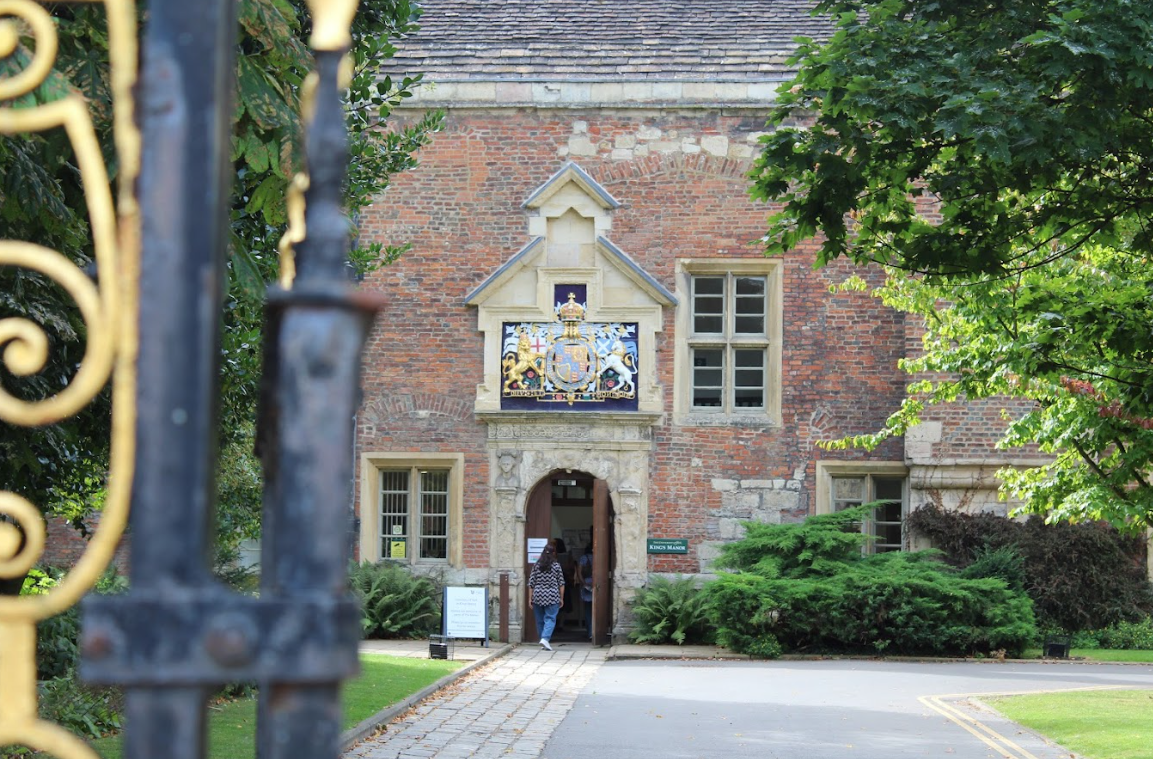
York St. John’s is set to take over King’s Manor, previously owned by the University of York.
The University announced in June 2024 that they will no longer conduct teaching or research in the site in the city centre.
King’s Manor was home to the University’s Department of Archaeology, the Centre for Eighteenth Century Studies and the Centre for Medieval Studies.
The decision to stop using King’s Manor was made due to running costs and the facility not meeting the University’s accessibility requirements.
The University has stated that York St. John’s will be taking over the lease of the historic York site.
In an email from the Humanities Research Centre, a spokesperson for the University said: “I’m sorry that I was unable to share the news beforehand directly with you all.
They continued: “King’s Manor will continue to serve as a valuable home for education, teaching and learning.
“We are working closely with our City partners about how we best conserve the building and surrounding precinct.”
The decision to leave King’s Manor was controversial receiving backlash from academics and the University’s postgraduate community.
Professor David Smith of the University’s Chemistry Department said on X: “Very sad to see cost pressures appear to be forcing University of York to move out of King’s Manor in the centre of town.”
An online petition calling for the University to reverse its decision to vacate the historical building received over 1000 signatures.
A University of York spokesperson said: “We can confirm King’s Manor will begin its new chapter under York St. John’s stewardship, who can continue its legacy as a beautiful and historic place for learning and teaching.
Looking ahead, whilst our decision to vacate King’s Manor was difficult, it allows us to make new plans on our campus, creating a strong interdisciplinary home to co-locate our Arts and Humanities teaching and research.”