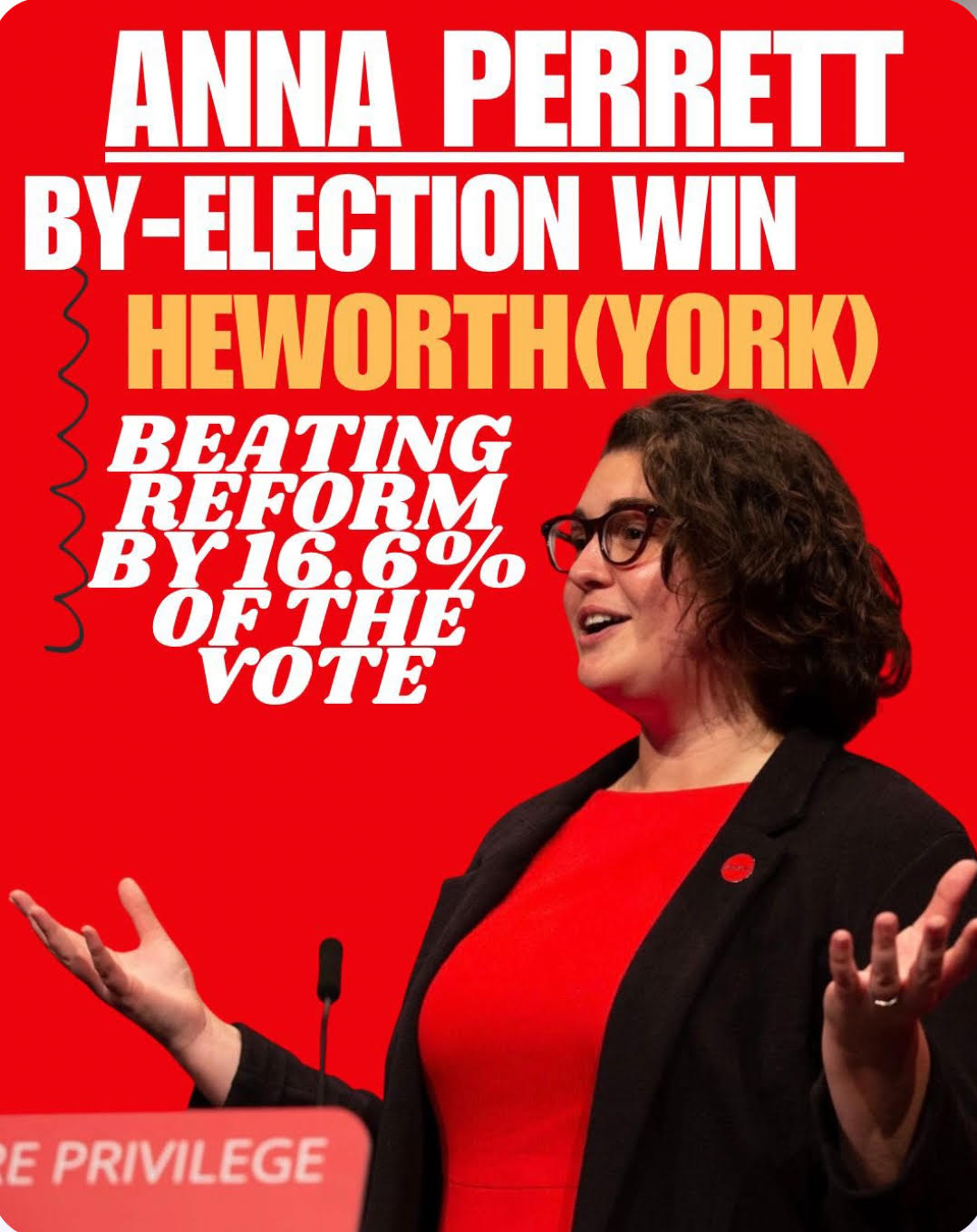
Labour won the by-election to the City of York Council on Thursday night with almost 500 votes separating the party from Reform, which got second place, and keeping Labour’s majority of 1 on the council intact.
Anna Perrett, who graduated in English Literature & Politics at the University of York in the late 2000s, was elected with 1,096 votes ahead of John Crispin-Bailey, son of Computer Science senior lecturer Chris Crispin-Bailey, who finished second with 601. Green candidate Ben Ffrench came third with 591 votes, ahead of the Liberal Democrat candidate Ian Eiloart, who won 528.
The Conservatives were thumped in this election, with 118 votes, way down from the 428 they got in 2023. Independent candidate Emma Hardy received 49.
The election was called in early December after incumbent councillor Ben Burton left York for work and stood down.
Ms Perrett, who has lived in the city since 2005, said to the Local Democracy Reporting Service that: “By-elections are always a bit of a referendum, but the scale of our result compared to the other parties shows a team who back residents’ concerns are going to win, rather than people who just turn up for the election.”
Labour’s Leader of the City of York Council, Labour’s Claire Douglas, said to the LDRS on Friday morning: “I’m really happy, the result’s bucked the national trend; I’ve enjoyed speaking to the people of Heworth, and I was confident that they would recognise our hard work.”
Not much of a contest, but not an insignificant result
Those searching for an exciting contest on Thursday night would be forgiven for going to bed early. Heworth hasn’t voted any way other than Labour since 1987, and it never looked like this by-election would be any different.
Labour and Reform put up two candidates with University connections. That’s no coincidence: a plurality of households in the Heworth ward are described by council data as being ‘Learners and Earners’. This meant the student demographic would always be key here and, even when the national party is in a time of strife, it could always bank on this voter bloc.
Reform will be proud of getting 20% of the vote, yet Nigel Farage’s party only beat the Conservatives’ vote in 2023 by five percentage points, despite their national strength in the polls. They remain without a seat on the council.
Talking of the Tories, their vote share collapsed by 300 votes compared to 2023. On the day Robert Jenrick caused a national political storm by defecting to Nigel Farage’s party, the idea that Reform is made up of Tories simply fleeing the sinking ship does not seem inconceivable.
Labour deserves to take some comfort from this win, but Heworth’s demographics tilt towards groups that tend to vote nationally for the party, rather than the city as a whole. They don’t appear to be out of the woods for the all-out elections next year.