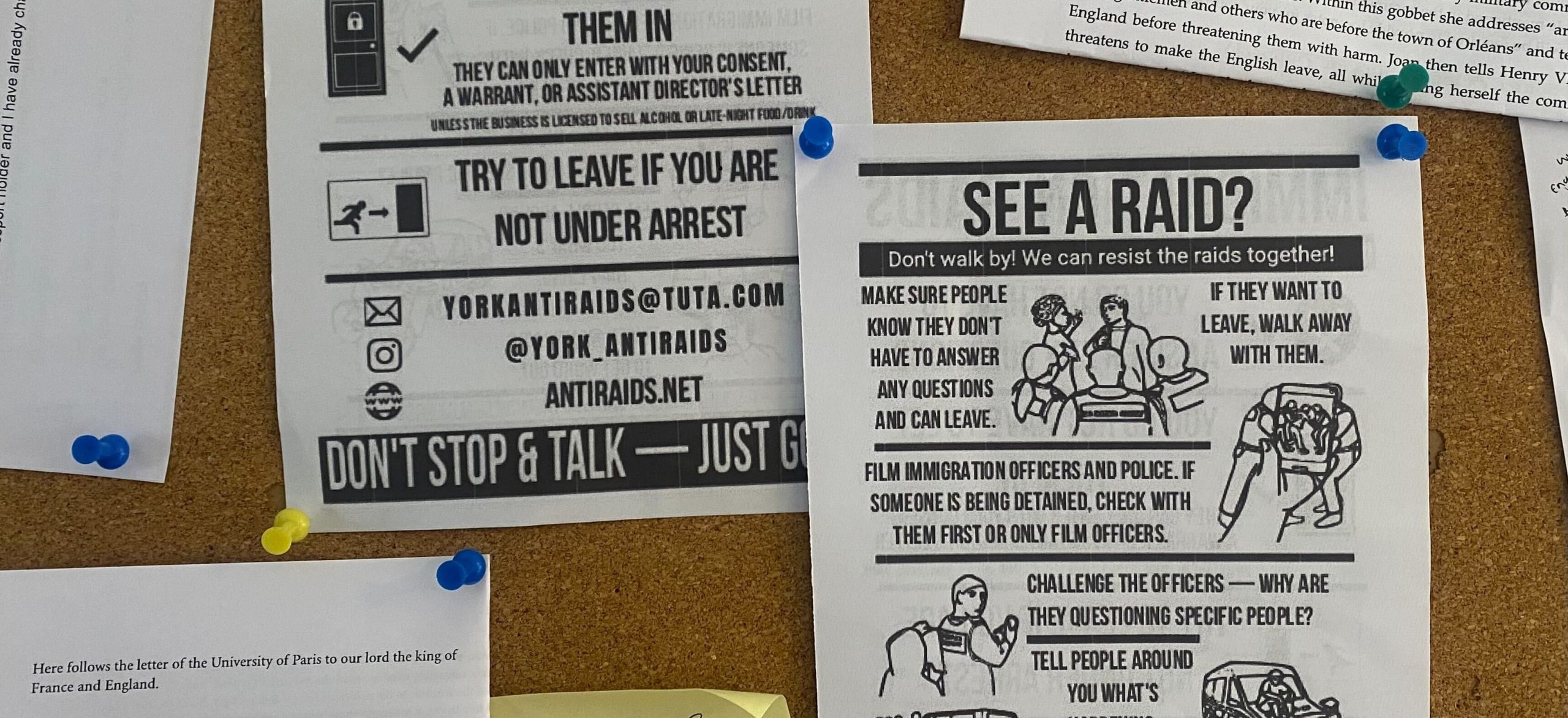
On 15th October, North Yorkshire Police launched Operation Super Tornado. This was one of the county’s largest enforcement days to date, targeting organised crime, retail theft, and immigration fraud. Immigration Enforcement officers carried out 18 visits across York, Scarborough, Harrogate, and Skipton, leading to seven arrests for suspected illegal working. The following day, a new local group called York Anti-Raids made its first Instagram post.
York Anti-Raids (@york_antiraids on Instagram) describes itself as a “local community response fighting back against immigration raids”. While new to York, the group joins an existing wider grassroots movement.
The Anti-Raids Network first emerged in London in 2012, set up by other London-based groups. It has since grown into a loose network of local groups across the UK, aiming to spread practical advice, legal information, and stories of resistance.
In North Yorkshire, immigration enforcement has become increasingly visible. Police described Operation Super Tornado as being part of a wider crackdown on organised crime and immigration-related crime, and said that:
Enforcement activity in North Yorkshire targeting illegal working has risen 56% in recent months.
Within these operations, Immigration Compliance and Enforcement (ICE) teams, part of the operational arm of the Home Office, carry out the immigration-related checks and arrests.
York Anti-Raids called attention to the operation, posting “Spotted: ICE on the Shambles” on Instagram, with details on the number of visits, arrests, and Civil Penalty Referral Notices issued to businesses.
On 19th September, Onyinye Grace Enyi, a York St John University international student, took to Instagram to share her experience with immigration enforcement after being instructed to leave the UK. In the video Grace explained that she faced deportation and had to withdraw from her degree for exceeding the 20-hour weekly working limit permitted by her student visa.
In the video, Grace showed screenshots of an email from the Home Office which listed her working hours each week ranging from five hours to 50. She explained: “I have to work even when I’m sick, I have to work even when I’m depressed” to fund her studies, especially after her father’s death.
These raids and deportations reflect a wider national trend. Between October 2024 and September 2025, Home Office data shows that ICE arrests rose by 63%, with more than 8,000 people detained and 11,000 raids carried out.
Home Office officials have described this as the “largest crackdown on illegal working since records began.”
York Anti-Raids places its work within this national picture. In an Instagram post announcing their first training session on 11th November, the group said the event would explore Labour’s approach to immigration and offer advice on how to respond to raids. Led by organisers from Hull Anti-Raids, the session focused on “Know Your Rights” guidance.
The post was made in collaboration with ACORN York, York Palestine Encampment, and York Student Action Network. Other posts from York Anti-Raids have been made in collaboration with other local activist groups, including Extinction Rebellion York and York Migrant Solidarity.
Within the first month of the account’s launch, York Anti-Raids gained more than 400 followers, with their first post receiving 244 likes and 12 reposts.
This level of support from York’s community and activist networks points to a growing grassroots resistance to the rising presence of immigration raids in the city.
York St John’s University and the Home Office have been approached for comment.