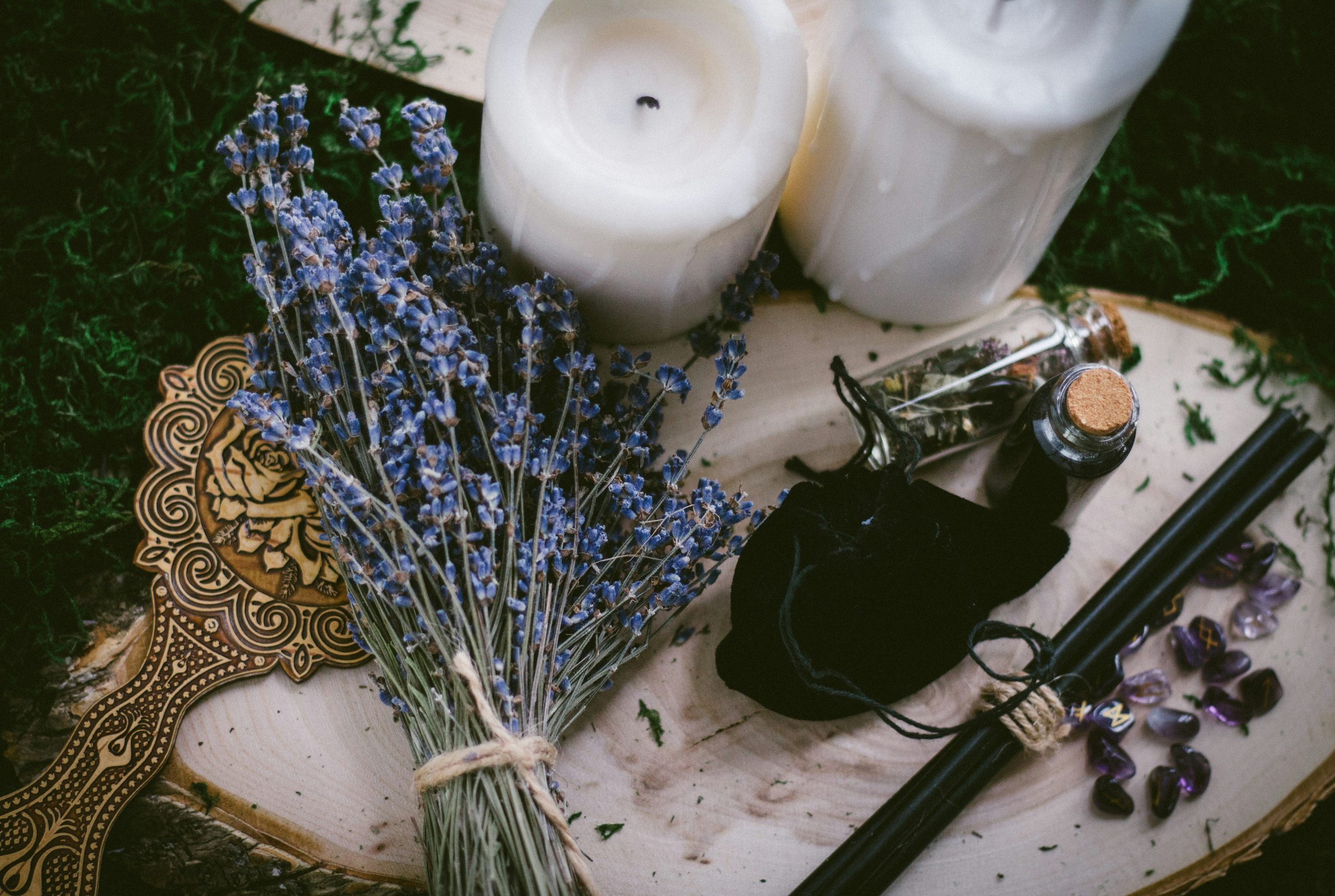
From turning men into pigs in Ancient Greece to purchasing love spells on an online marketplace for the price of a latte, spirituality and the occult have been prevalent amongst women for centuries.
Now with online marketplaces, videos, crystals, and tarot cards accessible with just a click of a button, digital spell-casting has become increasingly mainstream, amassing a faithful following consisting mainly of younger women.
But why are young women becoming so drawn to spirituality and what does this reveal about love, loneliness, and control in our generation?
Why it works (or why we want it to)
This is a well-known fact: Generation Z is an anxious generation. We are constantly bombarded with apocalyptic facts: climate change is irreversible, we will never own a home, our degrees are useless, and the leaders of our countries are incompetent and don’t care about us.
And it’s not like we can escape these ominous premonitions; it’s there on your feed when you’re trying to message a friend, it’s there during your classes when your lecturer has another rant about AI, and it’s even there in the advert about ice caps melting and polar bears starving to death when you’re trying to turn on a movie to unwind.
It’s also no secret that humans are lonely. At some point in our lives, everyone has felt that sharp pang of feeling like you don’t belong. If you haven’t then you’re either lying to yourself or incredibly lucky.
This isn’t just a modern generational issue, nor is it an issue that began because of social media, the internet, phones, and computers (or “it’s because of that stupid phone”, as our parents would put it).
Loneliness was first used as a word in the 16th century as “being far from neighbours” and began as a concept around the early 1800s.
Loneliness was recorded frequently in 19th century correspondence, with many people required to travel for work, training, and war, and unable to keep in contact with friends and family, many described feeling vulnerable and anxious – yearning for familiar connections and to build new ones.
This desire for connection and community has carried itself amongst humans to the 21st century, while keeping in touch with loved ones is just a click away on our phone for some, human interactions are meaningless and fleeting for many.
We lead busy lives: commuting, working eight hour shifts, going to university, studying until our brains glitch.
Romantic experiences can be no different; horrendous dates, half-hearted swiping on dating apps, and having the same repetitive small talk shouted over club music.
For many, spirituality provides a kind of refuge. The rituals, jar spells, moon baths, and tarot spreads become small acts of care and control in an unpredictable world.
Spell-casting offers structure and intention, a way to slow down and believe that things can shift for the better.
The Commercial Coven: An empowering space or a capitalist stunt?
With younger generations of women moving away from the traditional and often male dominated atmosphere of religious institutions, spirituality and witchcraft have evolved into a community of empowerment and self-care, where you can manifest and control your own future amidst a sea of anxiety and uncertainty.
This has even been endorsed by popular internet personalities, with influencer Bronte King claiming she paid an Etsy witch to guarantee good weather on her wedding day after a storm was forecast. When she received confirmation that “her spell has been cast”, she claimed that “The forecast had changed to pure sunshine.”
With faith and churchgoing steadily declining amongst younger generations, especially amongst younger women, many are turning to alternate forms of spirituality for comfort, guidance, and a sense of agency in a world that feels uncontrollable.
But while these spells promise what is unattainable for many: to have all your heart’s desires for less than a pair of shoes and a message from a person claiming to be a witch confirming your spell has been cast, many are realising the ethics of digital spellcasting are more complicated and murkier.
Is it truly a network of empowering women helping you obtain your goals and attract positive energy, or is it simply a commercialist stunt exploiting vulnerable people for profit?
When you log onto Etsy and search up ‘spells’, it is simply a competition of what appeals and can tempt you the most.
Flowery, embellished language promising to make you “be successful forever”, “beautiful and irresistible”, and “get Karmic revenge”, accompanied with mystical, bright pictures and graphics adorned with love hearts, candles, glitter, and money.
These persuasive descriptions can be seen as a form of upselling, using women’s insecurities and desires to guide them into purchasing from their digital shop.
It’s hard not to be lured in by it; the listings read like digital incantations, promising you desires that seem too good to be true.
Even my sceptical mind was beginning to sway as I caught my traitorous finger hesitantly pausing and hovering at the buy button over a ‘spell to make him cry, scream, and beg for you INSTANT RESULTS’ accompanied by a glowing review: “Started working immediately. He said he was at war with his mind because he wanted to stay mad at me but couldn’t.” Very tempting indeed.
The question is, is it right to promise to grant something so deeply desired to people likely reaching out in moments of vulnerability, using persuasive marketing for financial gain?
While these concerns are valid, many buyers contact these witches knowing their wishes are likely to be granted.
For them, the spells function more as a ‘placebo effect’, a symbolic act to attract positivity, confidence, and sense of control, especially in turbulent times.
In her article, ‘I paid an Etsy witch to supercharge my career’, Eilidh Dorgan stated that while the spell was not particularly successful, it provided her with a renewed outlook:
“While there’s so much doom and gloom out there in the world… it’s fun to live in a world of witches and spells; to keep a sliver of childhood in my life, despite what other adults may say.”