(Image Creds: Unsplash.com)
When first arriving in York, you cannot help but notice the wealth of History present in this relatively small city. Wherever you walk, you are surrounded by monuments to all ages, ranging from the Romans to today. It is easy to miss all these sights, even in my third year I am still discovering new places. So hopefully in this article I will provide you with a few interesting historical locations.
York Mansion House
One of the most prominent, yet also one of the most neglected by history-seekers. Situated in St. Helens Square, all students must have walked past it thousands of times on the way to Maccies, yet few have stopped to look at it. It’s that big red building next to Miller and Carter. Until recently, home of the Lord Mayor of York, it contains many of the city’s artefacts. The dining room, set out for a banquet also exhibits the Bowes Sword, the Great Mace, and various caps of maintenance from 1560 to the present.
The House itself is laid out as though the Lord Mayor was still living there. On the ground floor you will find along with the Dining room, the robing room where the lord mayor put on the robes of office (joined together by a butlers walk-through). Moving upstairs along the grand staircase, directly in front of you will be the State Room. This is the apex of York’s luxury. The walls are adorned with huge portraits of previous Lord Mayors, Monarchs, and Statesmen. If you look closely at the portrait of the Prince Regent, you’ll see that it is on hinges, and behind the painting you’ll find a petrified cat.
Moving from the luxury of the first floor with the state room (and the Drawing room next to it), travelling back down the grand staircase, then down the other staircase, you will find the servants area. A large cold dim place. To your right is the butlers pantry containing real log books showing the Lord Mayor’s expenses. In front of you are the kitchens with the cooking instruments of the day. And to your left are the tiled corridors to the store rooms, where the meat would have been kept.
After describing the house I feel like I’ve barely touched the surface of how incredible this House is. I haven’t mentioned all the artifacts such as the chocolate from the first world war, or the 15th century sword of King Sigismund. I haven’t told the bizarre story of how the Mansion House came to be (designed by a committee of councillors with no architectural experience). I haven’t even mentioned an entire floor which comprises the silver gallery and a balcony overlooking the State Room (to be opened soon).
Open most days, you can explore the Mansion House through general admission or by attending one of their great historical talks.
York Nuclear Bunker
What is often lost in the medieval atmosphere of York, it is also a great city to find relics of modern history. A bit out of the city centre (in Holgate) it was a miracle that I stumbled upon this place. Hidden behind housing and what I originally thought was a weird garage, turned out to be a two-storey, semi-subterranean, cold war bunker.
Built in 1961, the bunker’s primary role was in case of a nuclear war to monitor the explosion and fallout. It has everything you want from a cold war bunker. From the outside the thick green steel shell commands the residential carpark it finds itself in, with the high metal fences blocking off the long set of stairs leading to the vault-like door.
Inside contains what you hope for in a nuclear bunker. A large table with a map of northern England spread over it. Surrounding this, are clear displays with the outline of the monitored areas, split into quadrants and sections to monitor the catastrophe.
Museum gardens
If you want a more relaxing and aesthetic historical experience, try the museum gardens. This is the perfect place to discover lesser known parts of historical York. The gardens themselves are always busy, serving as a good place to relax, but within the garden itself, there are many sights of historical interest.
The most obvious is the ruins of St Mary’s abbey, a former Benedictine monastery. A Romantic ruin, where you can walk round its walls, through its archways, seeing foundation stones outline of what was once there. However, when visiting the site you can get lost in the medieval wonder, and miss what I think is the most interesting part of the place. Next to the abbey, there is a non-descript grave yard. This is the church yard of St Olave’s which was one of the first viking churches, and one of the few remains of Viking York. If you have read Macbeth, the real Siward (the general who helps defeat the titular character) is buried there.
Beyond Viking York there are remnants of an even older period in the city’s history. One of the few remaining Roman Walls in the city can be found in the gardens. For some reason this is never advertised, and most people usually walk past the narrow path leading to it without realising.
A 15th century Hospitium is also located within the grounds. It looks like a Tudor barn and is usually first observed from the outside of the gardens along Judi Dench Walk. It’s an interesting place to visit, my advice however, is try to visit it in the summer. To get to it you have to make your way down a bank and in the winter it can get quite muddy.
There are more historical places of interest within the gardens. The great thing about it is every time you go there you find something new. So when in the city center, and at a loss for things to do, pay a visit to the gardens.
Treasurer’s House
When walking around the Minster, you will find the cobbled streets and see a collection of houses. The Deanery is a stately and impressive house. The white cottages next door are charming too. However, you will spend most of your time peering though the Blue gates to the treasures house.
Architecturally different from the rest of York, it is symmetrical with Dutch-Gabled windows. It is probably the most beautiful house in the city. Its measured composition matches the personality of a previous occupant. John Goodricke a deaf astronomer, observed the stars from the window of the house, and changed our understanding of the universe. Goodricke college is named after him, so if you are a member it is a nice sight of pilgrimage.
Inside contains everything you want from a manor. Drawing rooms, portraits, artifacts, even ghosts.
York Minster
It’s an obvious suggestion, but it’s always worth a visit. Also, unlike most of these things on the list, free for students. Despite being over 1000 years old, the minster still dominates the York skyline. Wherever you walk in the city, the Minister always feels just around the corner.
When visiting it can often feel overwhelming, not knowing which part to investigate first. My advice when visiting, is go to the crypt first. It is the hardest part to find, but by far the most interesting. As you descend the steps into the cold bowels of the cathedral you are surrounded by tombs of saints hundred (in some cases thousands) of years old.
If you are more interested in the splendour of the cathedral recommend, going into the choir. It houses the grand organ, and the pews with coats of arms. In fact if you are interested in the personal history of York, the Minster is filled with statues, inscriptions, tombs, busts, carvings, and any other dedication you can imagine. My favourite would have to be Roger Le Scrope, former Archbishop of York and accidental revolt leader. His tomb is at the rear of the cathedral.
What else to see
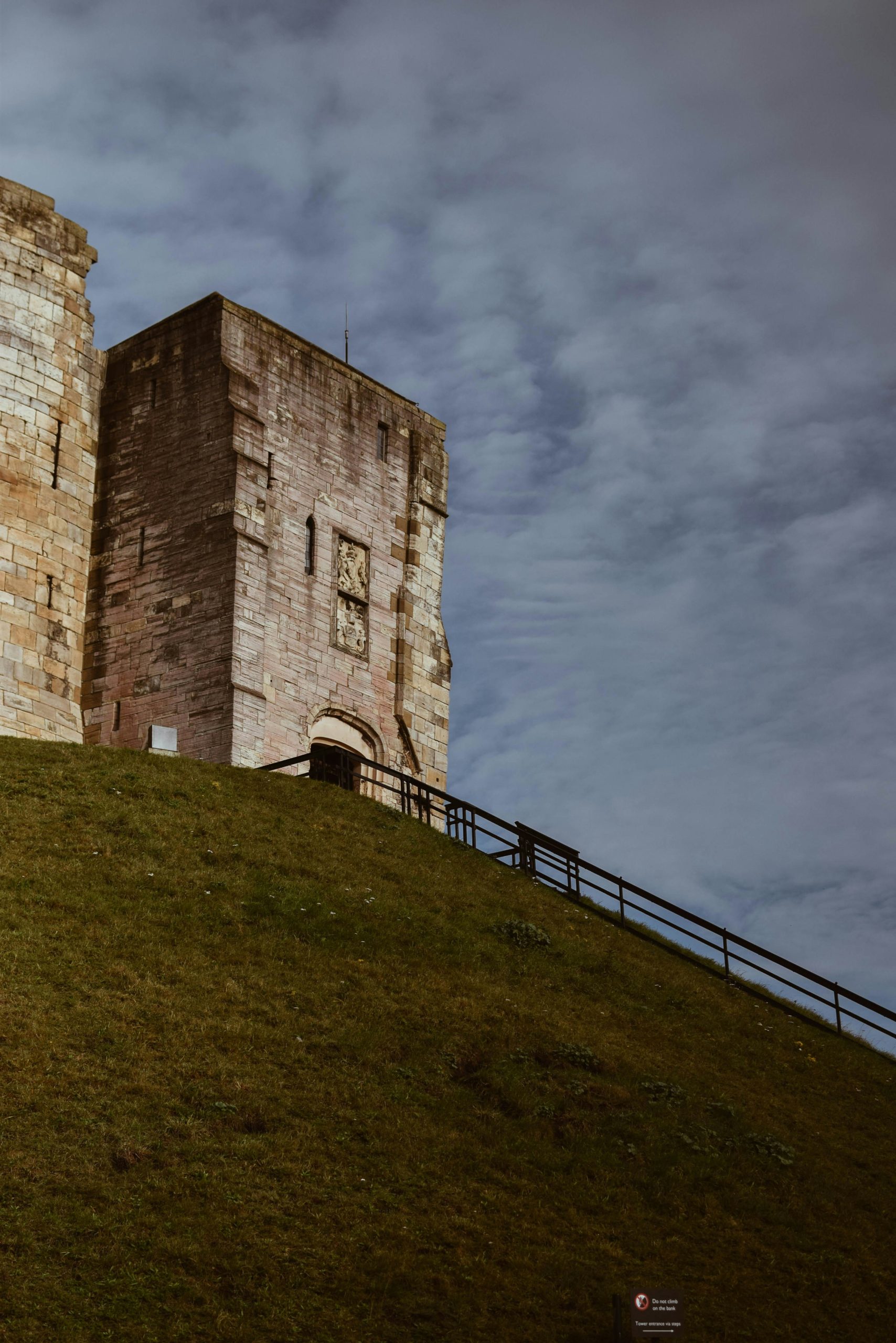
I have only scratched the surface of places of historical interest in this city. I haven’t mentioned Clifford’s tower, the walls, Fairfax House, Merchant Adventurers Hall, King’s Manor, the various medieval entrance gates to the city, or the university’s own Heslington Hall. There will still be places I haven’t discovered yet. It was only recently I found out about the bar convent chapel which contains a priest hole.
The best way to find historical York I’ve found is to keep your eyes open when wondering about the city. No matter where you are, you are always within touching distance of some remarkable piece of history.
York has so much history everywhere you look. Did you get to visit any of the lesser-known spots?