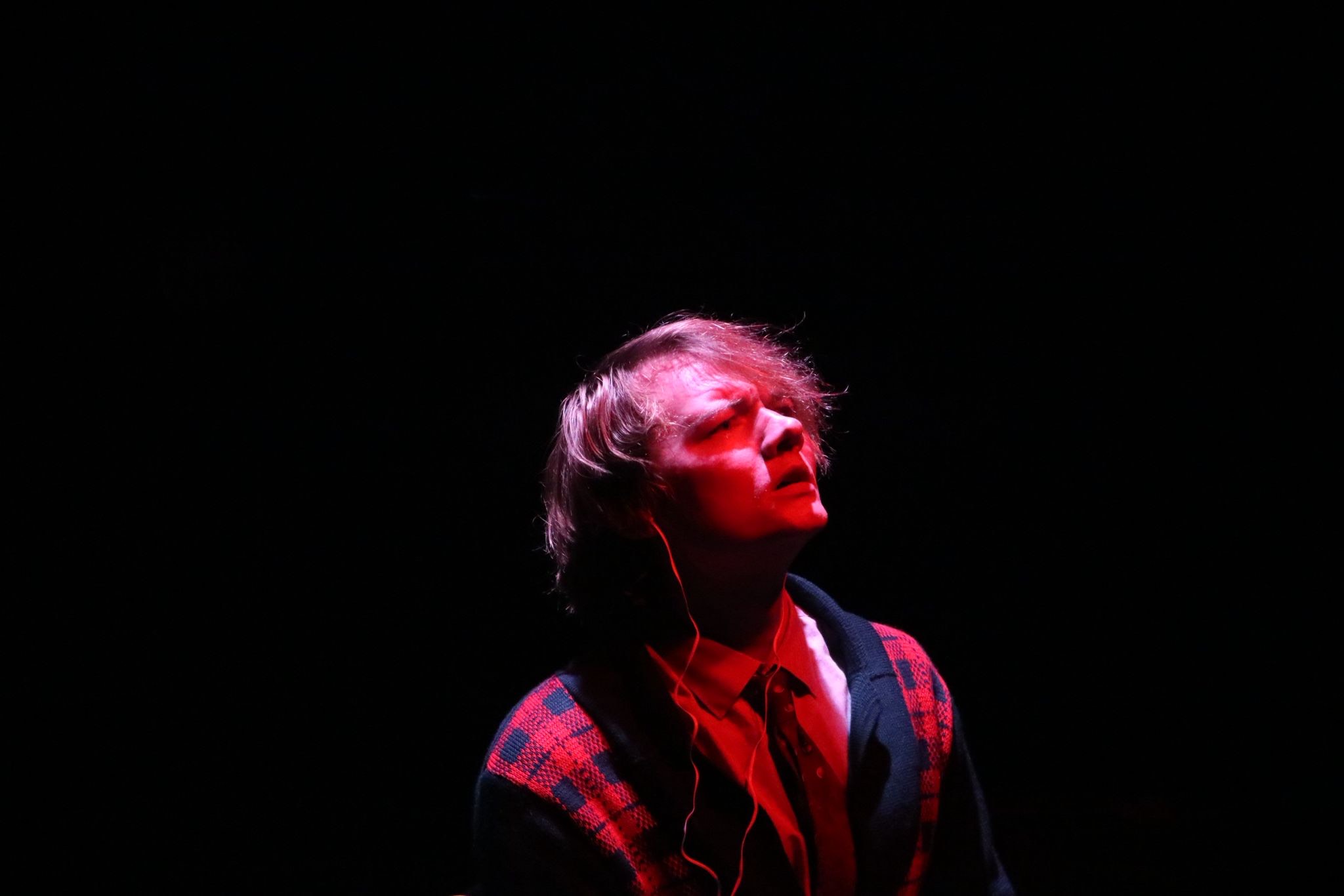
Set at Christmas time, the production follows the story of an intensely bureaucratic and unethical mental hospital that steadily begins to eat its own tail. The main premise of the play is that patient 6459 gave birth on Christmas morning; this unprecedented event begins to collapse the organisation, resulting in the entire staff being murdered, bar a singular survivor barring one. Opening with a tense exchange between Gibbs and his boss, Roote, the themes are obvious from the get-go. It focuses on bringing together every overblown instance of bureaucracy together into a single, cohesive storyline. The comedy of each of these instances serves to make the horror of the play even sharper as the very same people the audience is laughing at are the people habitually torturing and experimenting on human beings.
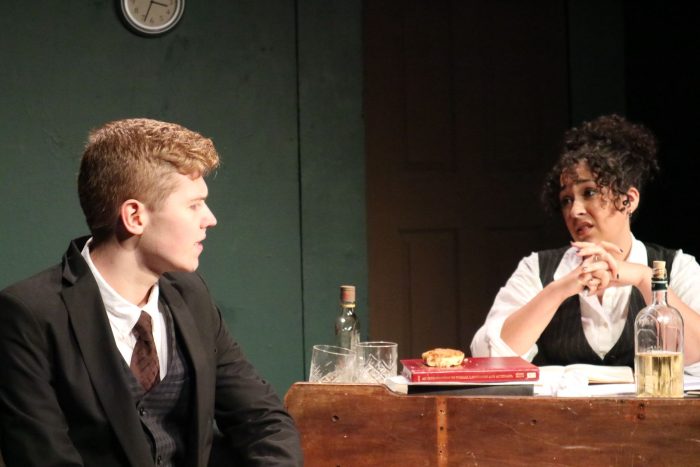
The dehumanising of patients to numbers makes them interchangeable to the director of the organization: Roote. Arthur Frost who plays Roote told me that he did try to make his depiction slightly Trumpian, an attitude clearly evident in his refusal to accept his own mistakes and his need to put down others to make himself feel important. Furthermore, the majority of the first-half creates sympathy in the audience for Gibbs, the mild-mannered secretary who largely deals with Roote’s volatile moods. This sympathy is replaced with horror as Gibbs dons a lab coat and steps behind the controls. He and his assistant, Ms Cutts’ cold, clinical demeanor while torturing Lamb was bone-chilling. The subtle changes in acting by Jack Henderson in his shift between being in control and acquiescing to Roote was key to the two-faced nature of his character. It is necessary for Gibbs to be likable as it forces the audience to examine their own complicity. Gibbs’ costuming also changes by the end of the production where he wears a coat rather than just a vest. Similarly, Arthur’s steady removal of layers of clothing in Act 2 shows his loss of power.
For the director, Edison Juniper, one of the most important characters is Lamb who as his name suggests is a lamb to the slaughter. He is used by Gibbs as a scapegoat for who impregnated Patient 6459. Only seen in Act One and briefly as a silhouette at the end of the play, Lamb is the best example of a victim of institutional harm. Thomas Cornell’s earnest character simply seeks to be a part of something. He longs to be useful and inadvertently volunteers for his own torture and death. Lighting truly makes this scene immersive, the green walls turning a more clinical grey under the red lighting. His costuming is also distinctly festive, making him feel significantly younger and naive. Gibbs also blames the escape of the prisoners and the subsequent murder spree on Lamb going missing so even in death, he is being used by the organization. By far one of the most absurd scenes comes near the end of the production with Gibbs, Roote and Lush all pulling knives on each other. This goes to show the backstabbing and volatile nature of being in power. Despite the alarming nature of all these instances, in the background Christmas music was regularly played, reminding the audience that it is actually meant to be a joyous time of the year.
One of the stand-out characters for me was Lush, played by Lydia Hughes. She brings a truly erratic energy to the production, sharply contrasting Gibbs’ reservedness and Root’s pompousness. Flipping between a range of inflections and voices, Hughes plays with the fact that her character is gender-swapped. She uses a deeper, masculine voice at moments where the line is assertive or direct and weaponises her femininity when the situation requires it. Her handling of Roote while drunk truly showcases her range. The gender-swapped casting also resulted in more dimensional interactions with the other characters. It raises the question as to whether Gibbs dislikes Lush because she is competitive and ungovernable or is it that behaviour as a woman that enrages him. She also serves as a contrast to Ms Cutts’ overly feminine and overtly sexual presentation. Both of these characters show how women can be complicit in upholding corrupt and misogynistic institutions.
For a play that was rehearsed in just three weeks, their chemistry on stage was brilliant. The production team also went truly above and beyond with using a real cake for all three nights, cutting a hole to place a microwave in and pre-slicing the piece of cake that Roote cuts on stage. Overall, the production left audiences with feelings of unease and horror as parts of it can be clearly found in everyday life.